January 7, 2026
Design Tips & Trends / Home Staging Design / Home Staging Insights / Interior Design
Luxury Home Staging Psychology: How Emotional Space Wins Buyers
Luxury home staging psychology is not about making a property look “nice.” It is about engineering a buyer’s internal narrative so the home feels inevitable. In the upper tier, decisions are rarely driven by feature lists alone. They are driven by identity, ease, and the subtle relief of feeling understood.
I’ve watched buyers tour extraordinary homes and still hesitate, not because the home lacked quality, but because the space never resolved their emotional questions: “Who am I here?” “How does my life work here?” “Does this match the version of me I’m building?” Emotional staging answers those questions quietly, before anyone asks them out loud.
In a market where everyone has access to the same materials, the same appliances, and the same cinematic photography, the differentiator becomes psychological. Not in a manipulative way. In a human way.
The invisible job of a luxury listing
High-net-worth buyers don’t only evaluate a home. They evaluate themselves inside it. That is why many luxury showings feel less like a transaction and more like a private audit: taste, standards, future plans, family dynamics, social life, even personal stamina.
Most staging focuses on what the home is. Emotional staging focuses on what the home makes people feel capable of. There’s a difference between “open concept” and “I can host without effort.” A difference between “primary suite” and “my mornings would be calm here.”
This aligns with the way modern consumers move through decisions: they loop, they compare, they seek reassurance, and they anchor to emotional certainty when the options are similar. McKinsey’s work on the consumer decision journey highlights that purchases are shaped by ongoing touchpoints and reinforcement, not a single linear moment. In luxury real estate, the showing is simply the most intimate touchpoint. The rest of the journey depends on what they carried out of the front door.
What luxury buyers are really buying
The higher the price point, the more “enough” the buyer already has. They aren’t shopping for shelter. They’re selecting a standard. They’re choosing a base of operations for a life with more complexity, more visibility, and often more pressure.
This is where luxury home staging psychology becomes practical. When buyers are deciding between two excellent homes, they choose the one that reduces cognitive load. The one that feels organized without feeling rigid. The one that holds their status without asking them to perform for it.
Environmental psychology has long studied how space affects mood, stress, behavior, and decision-making. The Journal of Environmental Psychology is full of research that reinforces what seasoned agents already sense: layout, light, acoustics, and perceived control influence comfort and preference. You don’t need buyers to quote studies; you need them to feel safe and clear enough to commit.
The KPI most agents miss: decision friction
Luxury listings rarely fail because they aren’t beautiful. They stall because they create friction: too many style messages, unclear function, or a sensory experience that’s slightly stressful. The buyer can’t articulate it, but they leave “unsure.” That word is expensive.
One clean KPI to watch is time-to-offer after second showing. In my experience, emotionally staged homes shorten that window because they reduce mental negotiation. Buyers stop asking, “Could this work?” and start planning, “How would we use it?”
To add a quantified anchor: industry reporting widely cites that staged homes can sell faster and for more than unstaged equivalents, with commonly referenced ranges such as 1% to 5% higher sale price and meaningfully reduced days on market depending on the segment and inventory conditions. Those ranges vary by market, but the strategic takeaway is consistent: staging is not cosmetic. It is a conversion lever.
A real showing that clarified the whole thesis
Not long ago, I walked a contemporary hillside listing with an agent I respect. The architecture was strong: glass, steel, flawless surfaces. The price point demanded certainty.
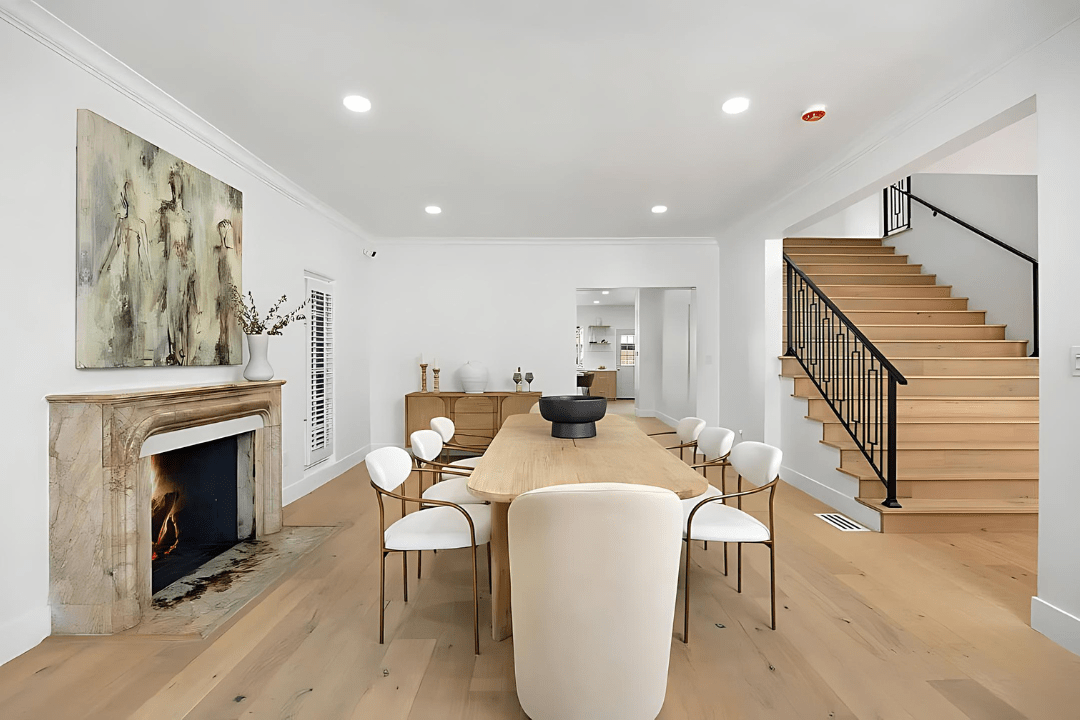
But the staging was loud in an unintentional way. Overscaled art competed with the view. A high-contrast palette made the interiors feel colder than the materials warranted. The dining table was set like a magazine shoot, not like a dinner anyone would want to host.
We watched a couple in their forties move through the home. They were polished, decisive, used to making big purchases quickly. They paused in the living room and both went quiet. The husband drifted toward the terrace; the wife sat for a moment and then stood back up, as if she couldn’t settle. When they left, the agent said, “They loved the house. They just need to think.”
They didn’t need to think. They needed the space to do less. Within two weeks, the staging was refined: fewer pieces, warmer tactile layers, quieter art, a dining setup that suggested intimacy rather than performance. The next buyer wrote after the showing, “It feels like a real life I can step into.” That offer came without a second tour.
The three emotional outcomes that close luxury deals
When I’m planning a luxury stage, I’m looking for three psychological outcomes. If you achieve these, the property stops feeling like inventory and starts feeling like a decision.
1) Control: the space makes them feel competent
Luxury buyers live with complexity. If the home reads as complicated, they’ll keep looking. The staging must communicate intuitive use: clear circulation paths, obvious zones, and furniture that frames function without forcing it.
Control is also visual. Over-styling creates noise, and noise reads as work. A calmer composition tells the buyer, “You’ll run your life well here.”
2) Belonging: the space reflects identity without being specific
This is where many staging teams accidentally polarize. They confuse “memorable” with “personal.” In luxury, personal details are rarely persuasive unless they belong to the buyer. The point is to create a canvas that feels socially fluent, not a designer’s signature.
Architectural Digest and Dezeen show the range of what high-end design can be, but the best luxury staging borrows restraint, not spectacle. It signals taste through proportion, material honesty, and negative space.
3) Anticipation: the space makes the future feel simple
Luxury is often purchased during transition: a new city, a new chapter, a new level of visibility. Staging should make the buyer’s next season feel frictionless. That means the office reads as calm and capable, the primary suite reads as recovery, and the kitchen reads as effortless hospitality.
If the property has a dramatic feature, the staging should direct emotion toward it rather than compete with it. The goal is not to impress the buyer. It’s to help them picture a life that runs cleanly.
Emotional staging is not softness. It is leadership.
Some people hear “emotional” and assume it’s indulgent. In reality, emotional intelligence is what high performers use to make decisions efficiently. A space that supports the nervous system is not a luxury add-on. It is functional.
Harvard Business Review has published extensively on the role of emotions in judgment and decision-making in business contexts. Buyers may be sophisticated, but they are still human, and humans rely on feeling as a form of information. If the home feels subtly dysregulating, they interpret that as risk.
In luxury real estate, risk is not only structural. It is social. “Will I regret this?” “Will this hold its value?” “Will this match my peers?” Emotional staging addresses those risks through coherence, quality cues, and calm.
The practical framework I use: signal, soothe, and scale
I keep my process simple, because complexity is where taste goes to die.
Signal: establish the level of the home immediately. This is about the first 12 seconds: entry sightline, lighting temperature, and one focal gesture that feels intentional. Not expensive. Intentional.
Soothe: remove micro-stressors. Tight furniture groupings that block movement, sharp contrasts that fatigue the eye, decor that reads as clutter, scent strategies that feel like concealment rather than cleanliness.
Scale: match the buyer’s sense of life. Great rooms should feel socially viable, not cavernous. Secondary bedrooms should suggest real use, not apology. Outdoor areas should look like an extension of the home’s rhythm, not an afterthought.
This is luxury home staging psychology in practice: you’re building certainty by reducing sensory negotiation.
Why this matters right now
Luxury buyers are more informed than ever, and more selective. They’re tracking markets, reading coverage, and watching inventory. Publications like The Wall Street Journal’s real estate section and trade outlets such as Inman and The Real Deal reflect what agents feel daily: buyer psychology shifts quickly with rates, headlines, and lifestyle trends. In that environment, emotional clarity becomes a competitive advantage.
When buyers have optionality, they don’t reward effort. They reward coherence. The home that feels easiest to say yes to often wins, even if another home has a slightly better view or a slightly newer finish.
The quiet promise of a well-staged luxury home
The most powerful staging doesn’t announce itself. It creates an internal experience: composure, orientation, and desire that feels grounded. That is why it works.
When agents and developers treat staging as psychology, they stop chasing trends and start designing for decision-making. They build a showing that reads as a life, not a display. And that is what high-level buyers are actually shopping for: a place where their standards make sense.
Explore Elite
Samantha Senia is the
founder and principal of Elite Home Staging and
Elite Maison, where she leads with an eye for emotional precision, spatial psychology, and aesthetic intelligence. Her work reshapes how space communicates identity, influence, and intention in interior design for luxury real estate.